2026 Top Educational Toys How Can They Reduce Screen Time?

Time:2026-09-07 Author:Isabella
0%

Screens are woven into family life, from homework tablets to evening cartoons. Yet many parents want play that feels active, practical, and genuinely enjoyable. This raises an important question: how can educational toys reduce screen time without creating another source of pressure?

The answer begins with purposeful design. Building blocks can turn a living-room floor into a small engineering site. A microscope can make a leaf, coin, or water drop worth examining. Story cards can help children invent characters instead of watching finished ones. These toys invite movement, conversation, problem-solving, and patience. Child-development specialists often connect these experiences with stronger hands-on learning and social interaction.

Play should feel natural.

However, no toy is a magic switch. A child may ignore an expensive robotics kit and choose a cardboard box. That response is useful, not disappointing. It shows that interest, age, skill level, and family routines matter. Parents may need to demonstrate one simple activity, then step back. A ten-minute building challenge can work better than a crowded toy shelf.

This guide explores the top educational toys for 2026 and the learning value behind them. It considers open-ended play, independent discovery, safety, durability, and realistic household budgets. It also questions exaggerated product claims. The best choice may not be the newest gadget. It may be the toy that keeps hands busy, sparks questions, and earns a place beside everyday family conversations.
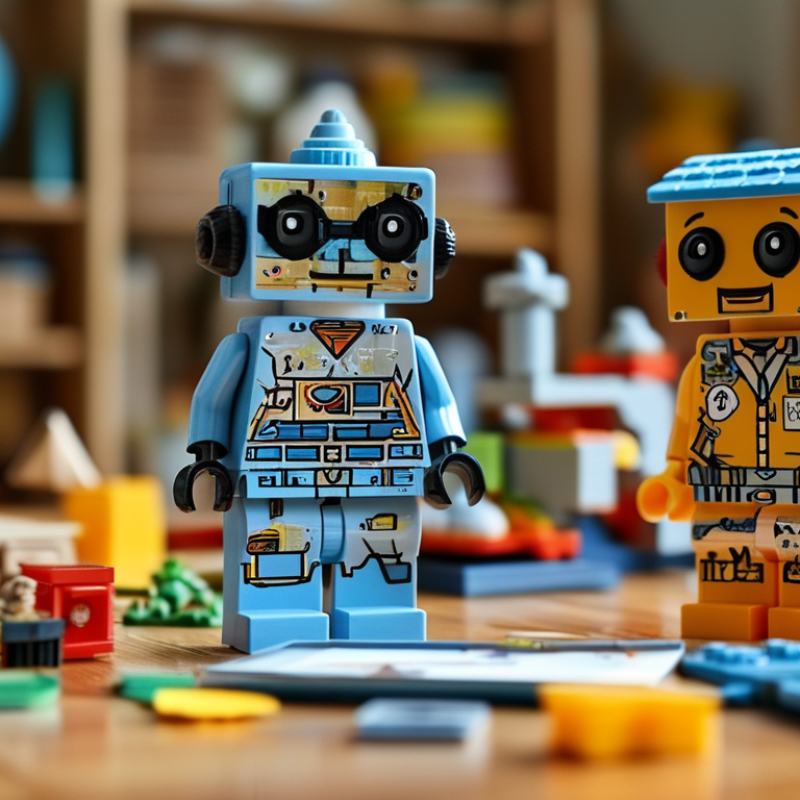
2026 Top Educational Toys How Can They Reduce Screen Time?

What Educational Toys Are and Why They Matter in 2026

2026 Top Educational Toys: How Can They Reduce Screen Time?

Educational toys are play materials designed to build skills through active discovery. They may support language, problem-solving, movement, creativity, or social learning. In 2026, their value feels sharper because many children spend long periods with fast digital entertainment. A physical puzzle slows the moment down. Building pieces require hands, planning, and patience. A pretend shop can develop vocabulary, counting, and cooperation without flashing notifications.

Good educational toys do more than keep children busy. They invite choices and allow more than one answer. This matters because children learn differently, and one popular toy cannot fit every child. A child may ignore a logic game but become focused while sorting shells, drawing maps, or repairing a simple model. That is not failure. It is useful feedback. Adults should watch how the child plays, then adjust the challenge. Age guidance, durable materials, and clear instructions also support safer, more reliable use.

Tips: Create a small “play shelf” with two or three rotating choices. Keep screens outside that area. Join the first few minutes, then step back. Ask, “What could we try next?” rather than solving the task. Choose toys that match current interests, not only academic goals. A timer can help with transitions, but strict limits may create resistance. I have found that replacement works better than sudden removal. Still, some days will be messy. That is normal.

How Educational Toys Support Learning Through Play

Educational toys support learning through play by turning passive time into active discovery. Children sort, build, match, count, and explain their choices. These actions strengthen early language, problem-solving, fine-motor, and social skills.

The World Health Organization recommends no more than one hour of sedentary screen time daily for children aged two to four. Common Sense Media’s 2020 Census reported that children eight and under averaged 2 hours and 24 minutes of screen media each day. A construction set can replace part of that routine with visible, hands-on progress. A child may build a bridge, test its balance, and change the design after it falls. That small failure matters. Learning is rarely neat.

Tips: Choose open-ended toys with more than one solution. Pair puzzles with questions, such as “What could work better?” Sit nearby, but avoid solving every problem. Ten focused minutes can be useful. The American Academy of Pediatrics also emphasizes shared media habits and consistent limits, rather than relying on toys alone.

Educational toys work best when adults connect play with real experiences. Counting cups during cooking can reinforce number sense. Role-play can develop vocabulary and emotional awareness. However, not every toy labelled “educational” creates meaningful learning. The UNICEF and LEGO Foundation report Learning through Play highlights active engagement, interaction, and enjoyment as essential conditions. A noisy toy may entertain briefly, while a simple set of blocks can invite deeper conversation. Results vary between children, homes, and cultures. That limitation deserves attention.

2026 Top Educational Toys: How Can They Reduce Screen Time?

How Educational Toys Support Learning Through Play

Toy Category Typical Age Range Primary Learning Benefits Screen-Free Play Activity Recommended Adult Support Example Play Block Observable Learning Indicator
Building Blocks and Construction Sets 2–8 years Spatial reasoning, early mathematics, planning, fine-motor coordination and problem-solving. Build a bridge, tower or house using a picture prompt, then redesign it to make it taller or stronger. Ask open-ended questions such as “What could make the structure more stable?” Avoid completing the model for the child. 20–40 minutes Uses positional words, compares size or height, tests a design and explains why a change worked.
Puzzles and Pattern Games 3–8 years Visual discrimination, memory, sequencing, persistence and logical reasoning. Complete an age-appropriate puzzle, create a repeating pattern or sort pieces by shape, color or size. Encourage the child to describe the strategy used and provide hints rather than immediate answers. 15–30 minutes Recognizes patterns, rotates pieces to test a fit and continues after an initial mistake.
Pretend-Play Kits and Role-Play Props 3–7 years Language development, social understanding, creativity, self-regulation and perspective-taking. Act out a shop, clinic, restaurant, travel station or household task with homemade signs and pretend materials. Introduce useful vocabulary and take turns following the child’s story instead of directing every action. 30–60 minutes Uses new words, maintains a simple storyline, negotiates roles and adapts the story when circumstances change.
Art, Craft and Modeling Materials 3–10 years Fine-motor control, visual expression, creativity, planning and emotional communication. Design a collage, model an object from clay or create a drawing connected to a story or real-world topic. Focus on the process rather than appearance. Ask the child to explain choices of materials, shape and color. 20–45 minutes Controls tools safely, combines materials intentionally and describes the steps used to complete the project.
Board Games and Cooperative Games 4–10 years Counting, working memory, turn-taking, rule-following, communication and emotional regulation. Play a short cooperative game in which players work toward a shared goal rather than competing only to win. Model respectful turn-taking, explain rules clearly and help children name feelings after success or disappointment. 20–40 minutes Waits for a turn, follows rules, counts accurately and responds to setbacks without abandoning the activity.
Early Science and Nature Exploration Tools 4–10 years Observation, classification, vocabulary, prediction and evidence-based reasoning. Use a magnifier, measuring tools or collection tray to observe leaves, rocks, insects or household materials. Ask “What do you notice?” and “What do you predict?” Record observations with drawings, marks or simple words. 20–45 minutes Groups objects by a stated feature, makes a prediction and changes an explanation after observing new evidence.
Music and Rhythm Instruments 2–8 years Auditory discrimination, rhythm, coordination, memory, self-expression and language timing. Copy a rhythm, create a sound story or play a stop-and-go movement game using simple instruments. Keep patterns short at first and invite the child to lead. Use predictable start-and-stop cues. 10–25 minutes Repeats a rhythm, changes volume or tempo intentionally and follows or creates a sequence of sounds.
Outdoor Movement and Active-Play Equipment 2–10 years Gross-motor skills, balance, coordination, spatial awareness and physical confidence. Create a simple obstacle course, target-throwing activity, balance route or movement challenge. Check the environment for safety, demonstrate one movement and allow the child to choose the challenge level. 30–60 minutes Balances, jumps, throws or changes direction with improving control and follows basic safety instructions.
Early Coding and Logic Manipulatives 5–10 years Sequencing, computational thinking, prediction, debugging and systematic problem-solving. Arrange direction cards or physical tokens to guide a character through a maze without using a digital device. Ask the child to predict the result before testing. Treat errors as opportunities to revise the sequence. 15–35 minutes Creates an ordered sequence, identifies where an error occurred and revises the instructions to reach the goal.
How these toys can reduce screen time: The play blocks shown are practical screen-free activity targets, not medical limits. They work best when toys are visible, easy to start, matched to the child’s developmental level and connected to a predictable daily routine. For children aged 2–5, major pediatric guidance generally recommends no more than one hour of high-quality screen media per day, while families of older children are encouraged to set consistent limits that protect sleep, physical activity, learning and family interaction. Children under 2 generally benefit from avoiding routine screen media except for activities such as video communication.

Evidence notes: Play-based learning supports children’s cognitive, language, social-emotional and physical development. Adult interaction, open-ended questions and opportunities for children to make choices increase the learning value of educational toys. Activity durations are practical planning examples and should be adjusted for age, interest, ability and safety.

Which Toy Features Help Children Reduce Screen Time

Educational toys can reduce screen time when their features compete with digital habits, not when adults simply hide devices. Common Sense Media’s 2021 Census reported that children aged 8 to 12 averaged 5 hours and 33 minutes of recreational screen media daily. The World Health Organization recommends no sedentary screen time for one-year-olds and no more than one hour for children aged two to four. That makes toy design a practical issue, not a passing trend.

Look for open-ended play, where one set of pieces supports several solutions. Building, sorting, storytelling, and role-play keep children making decisions. Tactile materials also matter: wooden shapes, textured cards, gears, and safe connectors give hands useful feedback. Clear progress helps too. Simple challenge cards, adjustable difficulty, and visible results can replace the instant rewards of a screen. Toys should work without an app. Offline play needs fewer interruptions.

Social features may create stronger routines. Cooperative puzzles, turn-taking games, and shared construction encourage children to speak, negotiate, and wait. A 2024 child-development review from the American Academy of Pediatrics links guided play with learning and engagement, especially when adults ask questions instead of controlling every move. Keep sessions short at first. Ten focused minutes can grow.

No toy works every evening. Some children will still choose a tablet, especially when tired or overstimulated. I have found that noisy lights and complicated rules can backfire. A quiet toy with one clear challenge may perform better. That limitation matters.

How to Choose Age-Appropriate Educational Toys

Choosing age-appropriate educational toys can reduce screen time because the toy must match a child’s abilities, interests, and attention span. The World Health Organization recommends no sedentary screen time for infants and limits it to one hour daily for children aged two to four. This is a ceiling, not a target. Common Sense Media’s 2020 Census reported that children aged eight and under averaged 2 hours and 24 minutes of screen media daily. A hands-on alternative needs to feel rewarding quickly.

For infants and toddlers, choose large, washable sensory toys with simple textures, sounds, and stacking actions. Avoid small detachable parts. Preschool children often benefit from pretend-play sets, chunky puzzles, and counting games with visible pieces. From ages six to eight, construction materials, beginner science kits, and rule-based games can develop planning and cooperation. Older children may prefer coding-free logic puzzles, model-building, or creative project materials. Check the age label, safety guidance, and skill level carefully.

I once offered a puzzle that was too difficult. It became clutter, not learning. That mistake still matters. Watch whether the child can begin independently, recover from errors, and explain what they discovered. The toy should invite conversation, movement, and repeated use without constant adult correction. The OECD’s 2023 Education at a Glance report links meaningful learning with active engagement, but no toy guarantees it. Some children need less choice, quieter materials, or a slower introduction. Parents should observe, adjust, and accept that an imperfect toy can still reveal useful preferences.

How Families Can Build a Balanced Screen-Free Play Routine

2026 Top Educational Toys: How Can They Reduce Screen Time?

A balanced screen-free routine begins with a small, repeatable invitation to play. In our home, a wooden puzzle waits beside the breakfast table each morning. After school, we set a 30-minute play window before homework or digital entertainment. A visible timer helps children understand the boundary without constant reminders. Keep choices limited to three toys, such as building blocks, a matching game, and art materials. Too many options can create frustration.

Child-development guidance often supports open-ended play because it encourages language, problem-solving, movement, and creativity. Educational toys work best when adults join briefly and ask thoughtful questions. “What could make this tower stronger?” invites more thinking than giving instructions. A pretend grocery shop can also build counting skills, conversation, and emotional confidence. These details matter more than buying expensive products.

Our first routine failed. We planned an hour of quiet play, but everyone became restless after fifteen minutes. I still sometimes check messages during playtime, which weakens the example I want to set. Now, I place my phone in another room and accept some harmless mess. Outdoor play can follow indoor activities, with chalk drawings, a ball, or collecting leaves. On busy evenings, even ten focused minutes can help. Children may resist at first, especially when screens were previously available without limits. Steady repetition usually matters more than perfect parenting.

2026 Top Educational Toys: How Can They Reduce Screen Time?

Building a Balanced Screen-Free Play Routine

For children aged 3–4, the World Health Organization recommends at least 180 minutes of physical activity throughout the day, including 60 minutes of moderate-to-vigorous activity, while sedentary screen time should not exceed 60 minutes. Educational toys such as building sets, puzzles, art materials, pretend-play kits, and movement games can help families turn this time into varied, screen-free play blocks.

Source: World Health Organization, Guidelines on Physical Activity, Sedentary Behaviour and Sleep for Children Under 5 Years of Age.

FAQS

: What are educational toys?

: Educational toys build skills through active play. They may support language, movement, creativity, planning, or cooperation. Children learn by doing.

How can these toys reduce screen time?

They offer hands-on choices instead of instant digital rewards. Puzzles, building pieces, and pretend shops keep children physically involved. Replacement often works better than sudden removal.

Which toy features encourage longer play?

Choose open-ended materials with several possible solutions. Textured cards, wooden shapes, safe connectors, and gears provide useful hand feedback. Clear progress helps children continue.

Should an educational toy use an app?

Not necessarily. Toys that work offline create fewer interruptions. Screens can add excitement, but they may also distract from conversation and problem-solving.

How can adults support play without taking control?

Join for several minutes, then step back. Ask, “What could we try next?” Let children make mistakes and explain their choices. Adults should guide, not solve.

How should families introduce a play routine?

Create a small shelf with two or three rotating choices. Keep screens outside that area. Begin with ten focused minutes, then extend the session gradually.

What if a child ignores the recommended toy?

That response is useful feedback, not failure. Try sorting shells, drawing maps, or repairing a simple model. Interests change.

Can every educational toy reduce screen time?

No toy works every evening. Tired children may still choose digital entertainment. Noisy lights and complicated rules can backfire. A quiet challenge may work better.

Conclusion

Educational toys are designed to make learning active, enjoyable, and meaningful through play. In 2026, they can help children develop creativity, problem-solving, communication, motor skills, and early academic abilities while giving them a rewarding alternative to passive digital entertainment. By asking children to build, imagine, sort, experiment, and complete challenges, these toys encourage curiosity and sustained attention. This explains how can educational toys reduce screen time: they offer hands-on experiences that are engaging enough to compete with the constant stimulation of screens.

Choosing the right toy depends on a child’s age, interests, abilities, and developmental stage. Open-ended materials, puzzles, construction sets, creative tools, and interactive learning games can support independent play and family cooperation. To create a balanced routine, families can set predictable screen limits, keep educational toys easily accessible, and schedule daily periods for individual and shared play. When adults participate occasionally and praise effort rather than perfection, children are more likely to develop healthy, screen-free habits.

Isabella

Isabella

Isabella is a dedicated marketing professional with a sharp focus on driving brand growth and engagement through strategic content creation. With an extensive background in digital marketing, she combines her passion for storytelling with her keen understanding of industry trends to deliver......