How to Do Educational Activities at Home for Kids?

Time:2026-09-22 Author:Aria
0%

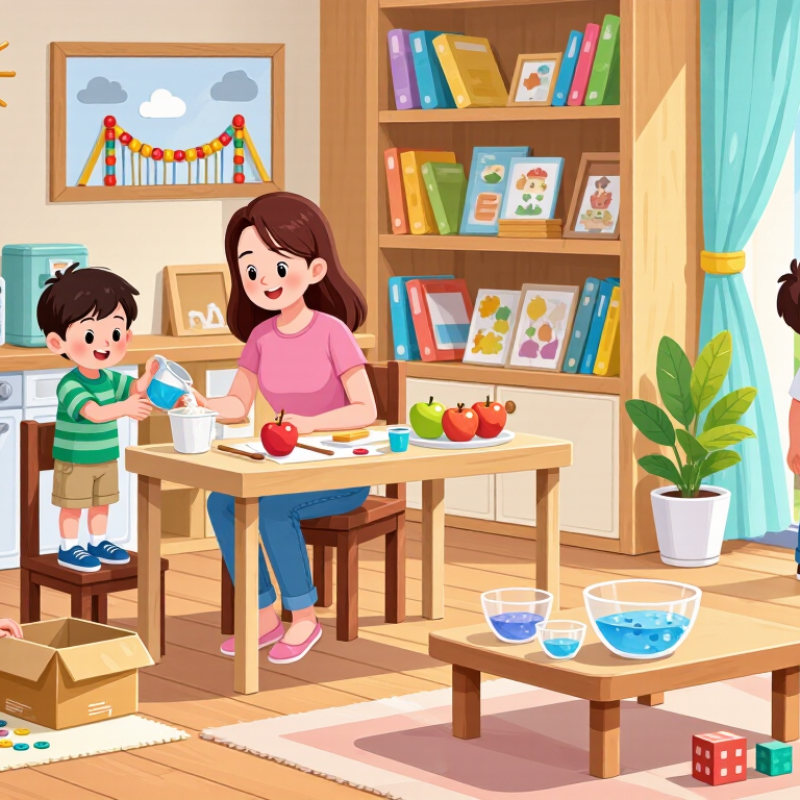
Educational activities at home do not need expensive materials, complicated schedules, or a classroom-sized space. A kitchen table, a cardboard box, and fifteen quiet minutes can become a small learning laboratory. Parents can invite children to count apples, sort buttons by color, measure rice, or describe clouds through a window. These ordinary moments connect school concepts with real experience.

So, what educational activities can parents do at home? Developmental psychologist Dr. Kathy Hirsh-Pasek, a leading researcher on learning through play, has said, “Play is not just about having fun; it is about learning.” Her insight supports a practical approach: follow the child’s curiosity, ask open questions, and allow time for exploration. A parent might ask, “What do you think will happen?” before mixing water and food coloring. The child may be wrong. That is useful.

This outline will examine reading games, simple science experiments, creative projects, movement activities, and everyday math. Each idea will focus on interaction rather than perfection. Children can read a recipe aloud, build a bridge from paper cups, or keep a weather chart beside the refrigerator. Small details matter. A child’s explanation may sound incomplete, but it reveals developing reasoning. Parents should listen before correcting.

There is no flawless method. Some activities may feel messy, rushed, or less successful than expected. That reality deserves attention. Meaningful learning often appears after a spilled bowl, a forgotten rule, or an unexpected question. With patience, observation, and reliable guidance, home can become a warm place where children practice thinking, communicating, and solving problems.
How to Do Educational Activities at Home for Kids?

Understanding the Goals of Educational Activities at Home

At home, educational activities should serve a clear purpose, not fill every quiet hour. The main goal is to help children build curiosity, practical skills, and confidence through ordinary moments. A five-year-old sorting buttons can practice counting and patterns. A child watering herbs can notice measurement, change, and responsibility. I have found that learning becomes stronger when children explain what they see, rather than repeat a correct answer. Keep the goal small and visible.

Before an activity, choose one learning target. It might be identifying three leaf shapes, comparing heavy and light objects, or telling a story with a beginning and an ending. Prepare simple materials, such as paper, spoons, string, or a cup of water. Use safe objects and supervise young children closely. Ask open questions: “What do you predict?” and “What changed?” Give children time to try, make mistakes, and try again. Adults should observe patiently and avoid correcting every detail. That is harder than it sounds.

A useful activity also supports emotional and social growth. Taking turns during a board game can develop patience, while cleaning a small spill can build independence. Adapt the task to the child’s age, language, attention span, and physical needs. Stop when frustration replaces curiosity. Then record one honest observation, such as “She counted accurately but rushed the explanation.” This note can guide the next activity better than a perfect worksheet. Not every attempt works. Sometimes the real lesson is learning how to adjust.

How to Do Educational Activities at Home for Kids?

Understanding the goals of home learning means balancing active play, focused learning, rest, and healthy screen habits. The chart uses WHO recommendations for children aged 3–4 as a practical planning reference.

How to use this chart: Include movement, storytelling, creative play, puzzles, and hands-on exploration throughout the day. Keep screen-based learning within the recommended limit, and protect sufficient sleep because healthy routines support attention, memory, and emotional development.

Source: World Health Organization, Guidelines on physical activity, sedentary behaviour and sleep for children under 5 years of age.

Preparing a Safe and Engaging Learning Environment

How to Do Educational Activities at Home for Kids?

A safe learning space begins with the floor, not the worksheet. Choose a bright area away from stairs, hot surfaces, and loose cords. Cover sharp corners and keep small objects beyond a young child’s reach. Store scissors, glue, and beads in closed containers. An adult should remain close during hands-on activities. Keep clean water nearby for messy experiments. Check the room’s airflow, temperature, and lighting before the lesson starts.

Children learn better when materials are visible and easy to use. Place paper, pencils, blocks, and measuring cups on a low table. Use washable surfaces whenever possible. A simple routine can include ten minutes of reading, a movement break, and a small science task. Give one clear instruction at a time. Offer two choices, such as drawing a plant or measuring its leaves. This supports independence without removing guidance. Keep emergency contact information accessible.

I once prepared too many activities for one afternoon. My child became restless, and the room felt crowded. The plan needed less noise and more time. Now I introduce one task, watch carefully, and adjust the difficulty. I also ask the child to explain what feels safe or uncomfortable. Their answer can reveal loose furniture, glare, or distracting sounds. The environment is never perfect. It should keep improving through observation, careful supervision, and honest reflection.

Choosing Age-Appropriate Activities and Learning Materials

How to Do Educational Activities at Home for Kids?

Choosing Age-Appropriate Activities and Learning Materials

Choosing the right activity begins with observing the child, not chasing a perfect lesson. A two-year-old may sort socks by color, name pictures, or pour water between cups. Keep it playful. Sessions of five to ten minutes often suit young children better than long worksheets. For ages four to six, try counting buttons, arranging picture cards, or tracing letters in sand. Use large, washable materials, and supervise small objects closely.

Older children can measure ingredients, build a paper bridge, or compare leaves found outside. Give them simple nonfiction books, rulers, pencils, and safe household objects. The reading level should stretch their skills without causing constant frustration. Clear instructions matter, but open-ended materials also encourage problem-solving. Ask, “What do you notice?” rather than supplying every answer. Short sessions work.

In my experience, children learn more when the activity connects with their questions. I once prepared a detailed science task, but my child cared more about why ice melted near the window. We changed the plan and tested ice in several places. It was less tidy, yet more meaningful. I still sometimes choose materials that are too difficult. Checking the child’s attention, grip, language, and confidence helps me adjust. A teacher or pediatric learning specialist can offer guidance when developmental concerns persist. Protect the learning space with safe tools, clear boundaries, and room for mistakes.

Guiding Children Through Structured Learning Steps

Educational activities at home work best when children follow clear, manageable learning steps. Set up a quiet corner with paper, pencils, books, and a small timer. Begin with one simple goal, such as reading a short story or measuring three household objects. Explain the task in plain language. Let the child repeat the instructions. This small check often reveals confusion early.

Guide the activity through four steps: observe, try, discuss, and adjust. During reading, ask the child to predict what might happen before turning the page. During a math task, let them measure a spoon, cup, and table edge. Write the results together. Give specific feedback, such as “Your measuring line starts at zero.” Avoid correcting every mistake immediately. Children need space to notice patterns and test ideas.

Keep each session short, perhaps fifteen to twenty minutes. A visible timer can make the routine feel predictable. I used to plan too many tasks, and my child became restless before finishing one. That taught me to watch behavior, not just the clock. If attention fades, offer movement, water, or a simpler question. Not every activity will succeed. Record one observation afterward, including what felt difficult, and adjust the next session accordingly.

Reviewing Progress and Adapting Future Activities

After a home learning activity, I review more than the finished worksheet. I watch how my child begins, persists, asks questions, and responds to difficulty. A five-minute observation can reveal more than a perfect answer. I record the date, activity, time spent, and one specific behavior. For example, my child counted buttons accurately but lost focus after eight minutes. Small evidence matters.

I compare this note with earlier observations, rather than judging one busy afternoon. Progress may appear as clearer explanations, steadier attention, or greater independence. I also ask my child what felt easy, confusing, or enjoyable. Their answer sometimes challenges my assumptions. Once, I planned a writing task, but my child learned more while explaining a drawing aloud. My original plan was too narrow.

Future activities should respond to these findings. If concentration fades quickly, I shorten the task and add movement between steps. If a skill seems secure, I introduce a slightly harder problem with familiar materials. I avoid changing several factors at once, because that makes progress difficult to judge. I also keep expectations realistic and check instructions against reliable educational guidance. Not every day works. I sometimes offer too much help, then mistake completion for learning. Now I pause before prompting and allow more thinking time. After a week, I review the notes again and adjust the activity, difficulty, or environment.

FAQS

What is the main purpose of educational activities at home?

The goal is to build curiosity, practical skills, and confidence. Learning should not fill every quiet hour.

How can ordinary household tasks become learning activities?

Sorting buttons develops counting and pattern skills. Watering herbs introduces measurement, change, and responsibility.

How should parents choose an activity’s learning target?

Choose one small, visible target. For example, compare heavy and light objects or identify three leaf shapes.

What materials are useful for home learning?

Use simple items like paper, spoons, string, books, and a cup of water. Choose safe objects and supervise young children closely.

Which questions help children think more deeply?

Ask, “What do you predict?” or “What changed?” Let children explain their observations instead of repeating correct answers.

What learning steps can children follow during an activity?

Use four steps: observe, try, discuss, and adjust. Let the child repeat the instructions before starting.

How long should a home learning session last?

Fifteen to twenty minutes is often enough. A visible timer can make the routine feel predictable.

What should parents do when children lose interest?

Offer movement, water, or a simpler question. Stop when frustration replaces curiosity. Keep it small.

How can parents respond to mistakes?

Avoid correcting every detail immediately. Give children time to notice patterns and try again.

What should parents record after an activity?

Write one honest observation, such as, “She counted accurately but rushed the explanation.” I sometimes plan too much, and the child becomes restless.

Conclusion

Educational activities at home should begin with clear, realistic goals that support a child’s curiosity, confidence, and overall development. Parents can create a safe, organized, and engaging learning environment by reducing distractions, preparing suitable materials, and allowing children to explore comfortably. When considering what educational activities can parents do at home, they might choose reading, simple science experiments, drawing, counting games, storytelling, or practical tasks according to the child’s age, interests, and abilities.

Effective learning also benefits from structured steps. Parents can explain the activity, demonstrate it when necessary, let the child try independently, and offer encouragement without taking over. Afterward, they should review the child’s progress by observing participation, understanding, and enjoyment. This feedback helps parents adjust the difficulty, timing, and type of future activities so learning remains productive, flexible, and enjoyable.

Aria

Aria

Aria is a dedicated marketing professional with a deep passion for innovative strategies and a keen understanding of our company's product offerings. With a wealth of experience in the industry, Aria excels at crafting engaging content that highlights the unique features and benefits of our......