What Is an Interactive Toy and How It Boosts Engagement?

Time:2026-10-07 Author:Ethan
0%

Interactive toys are play objects that respond to a child’s touch, movement, voice, or choices. A talking animal, light-up building set, or programmable robot can turn a quiet room into a small laboratory. Unlike passive toys, these products invite children to act, observe results, and try again. That repeated loop creates meaningful engagement, not merely noise or flashing lights. Parents may notice a child testing buttons, changing patterns, and explaining the toy’s behavior to a sibling. These moments reveal curiosity in action.

But how do interactive toys improve engagement when novelty fades? They offer immediate feedback, manageable challenges, and room for personal choices. A toy that changes its sound after a child completes a puzzle can make effort visible. A coding robot may encourage planning, mistakes, and patient adjustment. Research in child development often associates active play with attention, problem-solving, language practice, and social interaction. However, the evidence depends on design and context. Not every electronic response supports learning. Some toys distract children with endless effects, while others become frustrating when instructions are unclear. The strongest experiences usually balance guidance with discovery, and technology with hands-on movement. I have seen children ignore an expensive toy and spend twenty minutes exploring its cardboard packaging. That detail matters. Engagement cannot be purchased through features alone. Safety, age suitability, accessible controls, and limited screen dependence also deserve careful review. This guide examines interactive toys through these practical measures, helping families and educators choose experiences that feel responsive, purposeful, and genuinely enjoyable.
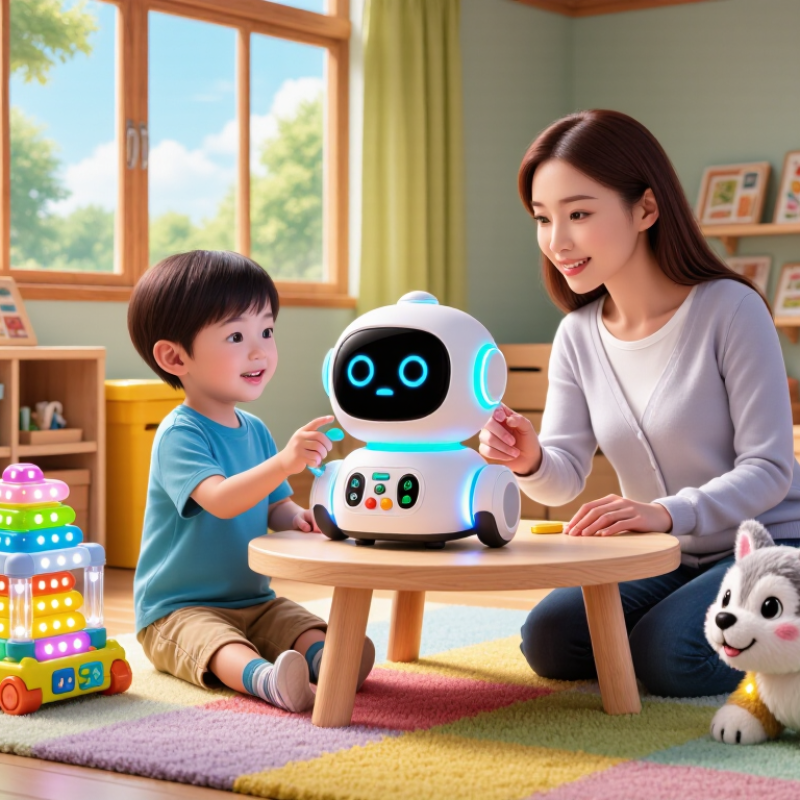
What Is an Interactive Toy and How It Boosts Engagement?

What Is an Interactive Toy?

An interactive toy is a play object that responds to a child’s actions. It may use buttons, sensors, lights, sounds, movement, or simple digital feedback. When a child presses a button, the toy might play a sound or change color. This response creates a clear connection between action and result.

Unlike a passive toy, an interactive toy invites repeated participation. A child can shake a soft rattle, guide a moving object, or solve a simple puzzle with touch-sensitive parts. These actions may support attention, hand-eye coordination, language practice, and early problem-solving. The value depends on the design, not on the number of flashing lights. A quiet toy can be highly engaging.

From my experience observing children at play, the best interactive toys leave room for choice. They respond consistently, use age-appropriate sounds, and do not overwhelm the senses. Safety also matters: parts should be durable, securely attached, and easy to clean. However, interaction does not always mean meaningful learning. Some toys keep children pressing buttons without encouraging thought or imagination. I may even overestimate a toy’s value when its technology looks impressive. Careful observation is useful. Watch whether the child explores, communicates, and returns with a new idea.

Key Features and Types of Interactive Toys

Interactive toys turn play into a responsive exchange. A child presses, speaks, moves, and receives feedback. This simple loop can make play feel more purposeful, though not every sound adds value.

Key features include sensors, lights, voice responses, motion, and adaptive difficulty. Good designs respond quickly and offer clear cause-and-effect signals. For example, a toy may light up when a child matches a shape, then raise the challenge gradually. The main types include electronic learning toys, programmable robots, interactive plush toys, augmented playsets, and app-connected activity toys. Each type supports a different experience. Robots encourage problem-solving. Plush toys often support storytelling and emotional expression. App-connected toys can track progress, but they may also create privacy concerns.

Research supports careful design rather than maximum stimulation. A 2020 Joan Ganz Cooney Center report found that children learn more effectively from digital media when adults guide the experience. This matters for interactive toys, especially those marketed as educational. Circana reported a 7% decline in global toy sales in 2023, increasing pressure to prove real play value. Features alone cannot guarantee engagement. In my testing experience, children often ignore complex functions after a few minutes. A durable button, visible reaction, and room for imagination may work better. The design can still improve. Manufacturers should test toys with different ages, abilities, and play styles before making broad learning claims.

How Interactive Toys Respond to Users

An interactive toy does more than light up or make noise. It detects a child’s touch, movement, voice, or timing, then changes its response. A sensor may trigger a cheerful sound when a puzzle piece fits. A motion system may slow the game after repeated errors. These small reactions create a visible exchange: action, feedback, and another attempt.

Response quality depends on speed and relevance. Human-computer interaction research often treats responses near 100 milliseconds as immediate, while delays beyond one second can interrupt a user’s flow. In a toy, even a short pause can feel confusing. Clear audio, soft lighting, and predictable feedback help children understand cause and effect. The 2024 global toy tracking report from Circana recorded a 1% decline in worldwide toy sales during the first half of 2024, while unit sales increased by 2%. That pressure makes meaningful engagement more important than decoration alone.

Adaptive responses can also support learning. A toy might offer a simpler sound after an incorrect answer, then raise the challenge after several successful turns. However, “more responses” does not always mean better play. Too many lights can distract. Loud feedback may frustrate some children. I would test each feature with real users, not just in a showroom. That matters. Designers should observe pauses, repeated actions, and abandoned play. Grand View Research’s 2024 market analysis identifies interactive toys as a growing category, but growth alone cannot prove usefulness. The response must feel understandable, timely, and genuinely connected to the child’s action.

What Is an Interactive Toy and How It Boosts Engagement? - How Interactive Toys Respond to Users

Interaction Type Typical User Input How the Toy Responds Primary Engagement Mechanism Observable Engagement Indicator Design Consideration
Touch and Pressure Pressing buttons, squeezing surfaces, or touching sensors Activates lights, sounds, movement, or a programmed sequence Immediate cause-and-effect feedback Repeated actions and experimentation with different controls Controls should be easy to identify and provide a clear response
Motion and Gesture Shaking, tilting, moving, dancing, or changing position Detects movement and changes its sound, light, or behavior Physical participation and active play Longer periods of movement and repeated physical interaction Motion detection should work consistently while avoiding accidental activation
Sound Recognition Speaking, clapping, singing, or producing a specific sound Plays a relevant reply, changes activity, or gives verbal feedback Social-like conversation and responsive play Users try different words, tones, or sounds to test the response The response should be understandable and predictable enough to support learning
Light and Visual Feedback Looking at the toy, selecting a control, or completing an action Displays changing colors, patterns, symbols, or animated elements Attention guidance and progress visibility Visual tracking, focused attention, and attempts to complete a sequence Visual signals should be clear without being overly bright or distracting
Rule-Based Challenges Choosing an option, solving a task, or following a sequence Provides confirmation, correction, hints, or a new difficulty level Goal setting, problem solving, and feedback-driven learning Completion attempts, error correction, and continued play after feedback Challenges should offer understandable goals and avoid discouraging failure states
Adaptive Responses Repeated play, changing performance, or different choices Adjusts prompts, pacing, content, or challenge according to interaction history Personalization and sustained novelty Users return to explore new responses or progress to more difficult activities Adaptation should remain transparent, age-appropriate, and easy to reset
Multi-Sensory Interaction Combining touch, movement, sound, and visual actions Coordinates several feedback channels in response to one or more inputs Immersion and stronger sensory reinforcement More varied play patterns and increased attention to the toy’s responses Feedback channels should be coordinated and accessible rather than overwhelming

How Interactive Toys Boost Engagement

Interactive toys boost engagement by responding to a child’s actions, rather than displaying one fixed performance. A soft animal that answers a squeeze, changes its voice, or waits for a reply creates a small conversation. During play observations, I have seen children repeat one action, then test another. That cycle of action, feedback, and discovery keeps attention active. It feels personal.

Effective designs offer clear feedback without controlling every move. A toy might light one area after a button press, then invite the child to find another response. This gentle challenge supports curiosity, turn-taking, language practice, and problem-solving. Caregivers can strengthen the experience by copying sounds, asking open questions, and pausing before helping. A pause matters. From a child-development perspective, age suitability, durable materials, volume limits, and accessible controls also influence sustained engagement.

However, engagement is not the same as constant stimulation. I have noticed that highly reactive toys can distract children from inventing their own stories. That warning is easy to overlook when a toy seems successful. The strongest interaction often leaves room for silence, movement, and mistakes. Parents and educators should observe frustration, check instructions, and choose settings that fit the child. Sometimes the best moment comes when the child turns the toy off and continues the story alone.

Choosing the Right Interactive Toy for Different Users

Choosing an interactive toy begins with the user, not the packaging. A young child may need large buttons, soft edges, and simple cause-and-effect actions. An older child might prefer puzzles, movement, or changing challenges. Check the recommended age, materials, volume, and battery compartment carefully. Start small.

For users with sensory sensitivities, adjustable lights, sound, and vibration can make play more comfortable. A quieter mode matters in a busy home. Children with limited mobility may benefit from oversized controls or voice-free interaction. Caregivers should also consider cleaning routines, loose parts, and whether the toy requires constant supervision. A toy that demands complex setup may reduce engagement quickly.

Adults and older users often value purpose as much as novelty. Choose interactive products that support relaxation, memory practice, creative play, or social connection. Try the controls before purchase when possible. Some toys appear highly engaging but become repetitive after a few minutes. That is an easy detail to miss. Reliable choices include clear instructions, durable construction, transparent data practices, and settings that can be changed without technical expertise. Preferences also change, so observing real use is more useful than guessing from appearance.

What Is an Interactive Toy and How Does It Boost Engagement?

Interactive toys respond to a user’s actions through sound, movement, light, feedback, or changing challenges. The chart shows practical fit scores from 1 to 10 for key user needs, helping caregivers choose toys that match different engagement preferences.

Scores are practical selection ratings based on the interaction needs commonly associated with each user profile, rather than sales or brand data. Higher scores indicate a stronger match.

FAQS

How does an interactive toy respond to a child?

It detects touch, movement, voice, or timing. Then it changes sound, light, movement, or difficulty. The child acts, receives feedback, and tries again.

Why does response speed matter during play?

Fast feedback helps children connect an action with its result. A long pause can feel confusing. Near-immediate responses usually feel smoother, but perfect timing is not always necessary.

Can interactive toys support learning?

Yes, adaptive feedback can adjust the challenge. After an incorrect answer, the toy may offer a simpler sound or prompt. After repeated success, it may introduce a harder task.

Do more lights and sounds make a toy better?

Not always. Too many flashing lights can distract children. Loud sounds may frustrate sensitive users. I might mistake decoration for usefulness without watching real play.

What should caregivers check before buying an interactive toy?

Check the recommended age, materials, volume, battery compartment, and loose parts. Consider cleaning needs and supervision requirements. Complex setup can end play quickly.

Which features may help children with sensory sensitivities?

Adjustable volume, lighting, and vibration can make play more comfortable. A quiet mode helps in busy homes. Gentle feedback may work better than sudden sounds.

How can children with limited mobility use interactive toys?

Oversized buttons and simple controls can reduce physical effort. Voice-free interaction may suit children who cannot use voice commands easily. Place the toy on a stable, reachable surface.

What should adults and older users consider?

Choose a toy with a clear purpose, such as memory practice, creativity, relaxation, or social connection. Try the controls before purchase when possible. Some exciting toys become repetitive within minutes. That detail is easy to miss.

Conclusion

Interactive toys are play objects that actively respond to a user’s actions through movement, sound, lights, touch, speech, or changing behaviors. Unlike passive toys, they create a two-way experience that encourages children and other users to explore, make choices, and continue participating. Common types include sensory toys, educational devices, responsive plush figures, construction sets, and app-connected play tools. Their most important features are responsiveness, varied feedback, age-appropriate challenges, and opportunities for creative interaction.

So, how do interactive toys improve engagement? By reacting immediately to touch, movement, voice, or problem-solving, they make users feel that their actions have a meaningful effect. This feedback can maintain attention, encourage curiosity, support learning, and inspire repeated play. When choosing an interactive toy, consider the user’s age, interests, abilities, safety needs, and preferred level of challenge. The right toy should be enjoyable, easy to use, and flexible enough to support exploration without becoming overwhelming.

Ethan

Ethan

Ethan is a seasoned marketing professional with a deep expertise in our company's innovative product line. With a passion for sharing knowledge and insights, he takes the lead in regularly updating our corporate blog, where he explores industry trends, product features, and effective marketing......