7 Tips on Trends Shaping the Educational Toy Industry

Time:2026-10-22 Author:Aria
0%

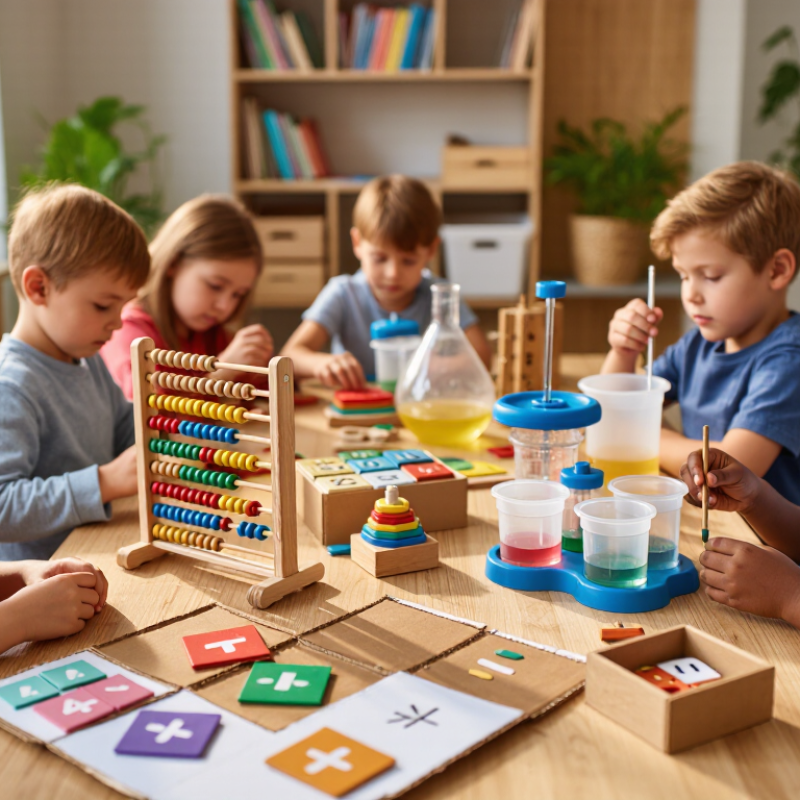
The educational toy industry is changing quickly, but not always predictably. Parents now expect toys to entertain, teach, and survive repeated use. A wooden counting set, a screen-free coding kit, or a science experiment box must offer visible learning value. At the same time, children still need open-ended play, not constant instructions. This tension introduces an important question: what trends are shaping the educational toy industry?

Recent industry reports provide useful evidence. Circana’s Global State of the Toy Industry 2024 reported a seven percent decline in global toy sales during 2023, increasing pressure on brands to prove value. Grand View Research forecasts strong growth for educational toys through 2030, although market definitions differ between research firms. The 2023 UNESCO Global Education Monitoring Report also warns that educational technology should remain appropriate, equitable, and supported by evidence. Digital features alone do not guarantee better learning.

Developmental psychologist Kathy Hirsh-Pasek describes play as “the engine of learning.” Her view supports the growing demand for toys that encourage curiosity, collaboration, problem-solving, and physical interaction. Sustainability is also becoming more practical. Families increasingly notice recyclable packaging, durable materials, and toys designed for more than one age group. However, these trends are not universal. A connected robot may inspire one child and frustrate another. A premium STEM kit may be inaccessible to many families. No single report captures every classroom, home, or cultural setting. These limitations deserve honest attention as the following seven tips examine the industry’s most meaningful shifts.
7 Tips on Trends Shaping the Educational Toy Industry

Market Definition: Educational Toys Reached USD 57.3 Billion in 2023 (FBI)

The educational toy industry is moving from simple skill practice toward measurable, screen-aware learning. Fortune Business Insights (FBI) valued the market at USD 57.3 billion in 2023. That figure gives manufacturers and retailers a useful scale, not a promise of equal growth everywhere. Market definitions differ, especially across age groups and product categories. Still, the number needs care. Tip one is to check the source, region, currency, and included products before planning inventory.

Tip two is to design for hands-on discovery. A counting set should survive repeated sorting, drops, and curious chewing by young users.

Tip three is to connect physical play with optional digital guidance, rather than replacing touch with another screen.

Tip four is to support inclusive learning with adjustable difficulty, textures, audio choices, and clear caregiver instructions.

Play matters. In practice, simple controls often outperform crowded features.

Tip five is to build evidence into product development. Small trials with children, educators, and caregivers can reveal confusing rules or unsafe assumptions before launch. Tip six is to make sustainability practical: durable parts, repairable components, and restrained packaging deserve more attention than vague environmental claims. Tip seven is to watch social-emotional learning, coding, language development, and open-ended creativity without chasing every trend.

My caution is simple: a large market does not prove educational value. Some products look impressive but produce little independent thinking. Teams should measure repeat use, age suitability, accessibility, and observed learning, then revise honestly when results disappoint.

STEM Innovation: Align Products with the Projected 8.0% Market CAGR (FBI)

STEM innovation is moving educational toys beyond screens and colorful packaging. Fortune Business Insights projects the educational toys market to grow at an 8.0% CAGR, making product alignment more important than novelty. The OECD’s PISA 2022 report also recorded a global decline in mathematics performance, highlighting demand for practical learning experiences.

Tip 1:

Design around one measurable STEM skill.

Tip 2:

Turn play into a visible project, such as building a bridge that holds a small book.

Tip 3:

Add progressive challenges for different ages.

Tip 4:

Use open-ended parts, not only fixed answers. Children should test, fail, and rebuild. A bright package is not proof of learning.

Tip 5: Test prototypes with teachers and families before scaling production. In practice, instructions often look clear to designers but confuse children.

Tip 6: Track evidence, including completion rates, problem-solving attempts, and repeat play.

Tip 7: Control costs without removing essential materials.

The National Science Foundation continues to emphasize hands-on STEM learning and workforce readiness, supporting this product direction. However, not every STEM label creates meaningful learning. Weak experiments, unclear goals, and excessive complexity still appear in early prototypes. Manufacturers should review user feedback honestly and revise each version.

Digital Learning: Combine Physical Play with the USD 108.7B Global Toy Market

Digital learning is reshaping the USD 108.7B global toy market. The strongest products do not replace hands-on play. They connect it with purposeful digital guidance. A child might build a bridge with wooden pieces, scan a simple code, and test its strength on a tablet. Keep it tactile. Let the screen support the challenge, not become the activity.

Designers can follow seven practical principles. Match digital tasks to the child’s age and motor skills. Offer clear instructions with minimal reading. Add adjustable difficulty for different learning speeds. Include offline play when internet access is limited. Protect personal data through privacy-conscious design. Test sounds, colors, and controls with children who have varied abilities. Measure learning through observed behavior, not screen time alone. Educators and child-development specialists should review these choices before launch.

Good testing also reveals uncomfortable truths. Digital rewards may increase excitement but reduce patient problem-solving. A bright animation can distract from the physical lesson. Pause often. Adults should observe whether children explain, build, compare, and revise. Market growth is promising, but a large market estimate does not prove educational value. Reliable evidence comes from repeated trials, transparent methods, and feedback from families and teachers. Some designs will fail. That failure can expose what children actually need.

7 Tips on Trends Shaping the Educational Toy Industry - Digital Learning: Combine Physical Play with the USD 108.7B Global Toy Market

No. Industry Trend Verified Data Point Metric / Period Implication for Educational Toys Public Source
01 Hybrid Physical–Digital Play Approximately 5.4 billion people used the internet worldwide. 2023
Global internet users
Create toys that connect hands-on construction, movement, or storytelling with optional digital feedback, sound, or interactive learning content. International Telecommunication Union, Facts and Figures 2023
02 Accessible and Inclusive Design An estimated 1.3 billion people experience significant disability. About 16% of the global population
2022 estimate
Use high-contrast visuals, tactile elements, adjustable difficulty, captioned audio, and controls that support different physical and sensory abilities. World Health Organization, Disability and Health
03 STEM and Problem-Solving Learning Around 70% of children in low- and middle-income countries cannot read and understand a simple text by age 10. 2022
Learning poverty estimate
Prioritize play patterns that build sequencing, language, numeracy, experimentation, and cause-and-effect reasoning rather than focusing only on entertainment. World Bank, Learning Poverty
04 Sustainable and Circular Materials The world generated 62 million tonnes of electronic waste. 2022
Global e-waste generation
Design modular products with replaceable parts, rechargeable power options, repair instructions, recyclable packaging, and clear end-of-life guidance. United Nations Institute for Training and Research, Global E-waste Monitor 2024
05 Safe Digital Experiences The United Nations Convention on the Rights of the Child recognizes children’s rights to privacy, protection, and access to appropriate information. International standard
Article 16 and Article 17
Use data minimization, parental controls, transparent permissions, offline functionality, and age-appropriate content in connected learning toys. United Nations, Convention on the Rights of the Child
06 Family Co-Play and Social Learning Early childhood development is supported by responsive interactions and play-based learning with caregivers. Global guidance
Early childhood development
Include cooperative missions, parent prompts, shared storytelling, and activities that encourage communication instead of isolated screen use. UNICEF, Early Childhood Development
07 Large, Diverse Market with Digital Upside The global toy market benchmark referenced in this topic is valued at approximately USD 108.7 billion. USD 108.7B
Market benchmark cited in the brief
Use a tiered product strategy: affordable physical playsets, optional digital extensions, multilingual content, and reusable learning modules for different age groups. Benchmark supplied in the article title; market estimates vary by scope, product definition, and measurement year.
Note: Market figures can differ according to whether learning software, electronic devices, collectibles, and regional sales are included in the definition of the toy market.

Inclusive Design: Build Accessibility into a Market Serving Diverse Learners

Educational toys now serve learners with different motor, sensory, language, and attention needs. Inclusive design should begin before the first prototype. In classroom observations, small barriers often matter most. A stiff latch can exclude a child with limited grip. Tiny labels may frustrate early readers. Loud sounds can overwhelm learners who need a calmer environment. These details decide whether play feels inviting or impossible.

Design teams can build accessibility into the toy instead of adding it later. Use large, textured controls and clear visual cues. Offer audio, tactile, and picture-based instructions for one activity. Keep pieces easy to hold, but durable enough for repeated classroom use. Adjustable difficulty supports children who learn at different speeds. A teacher should explain the task without a separate manual. Caregivers also need honest information about noise, materials, cleaning, and required support. Testing should include disabled children, families, educators, and therapists. Their feedback can reveal problems that a design review misses.

Perfection is unrealistic. A high-contrast interface may still feel tiring for some children. That possibility deserves attention. Accessibility requires repeated observation, not a one-time checklist. Measure participation, not only completion rates. Ask whether a child can choose, recover from mistakes, and play beside peers. Design for dignity. Make room for difference.

Safety and Sustainability: Meet Global Standards as Toy Buyers Demand Transparency

Educational toy buyers now inspect more than colors, features, and learning claims. They ask where materials come from and how safety was verified. A responsible supplier should provide test reports, batch records, and clear age guidance. Independent laboratory checks can identify small parts, sharp edges, heavy metals, and flammability risks. Standards such as EN 71, ASTM F963, and ISO 8124 guide different markets. Requirements still vary by region. That detail matters.

Sustainability now reaches the factory floor. Buyers examine recycled content, responsible wood sources, water-based coatings, and packaging volume. A toy may use recyclable cardboard, yet include unnecessary plastic ties. That contradiction weakens trust. Better documentation connects material claims with supplier declarations and credible verification. Traceability should follow each production batch from raw material to warehouse. Photos of labels, warning icons, and sealed packaging make audits more practical.

In my sourcing experience, transparency works best when information is specific and easy to challenge. “Eco-friendly” says little without percentages, certificates, or renewal dates. Buyers should also test instructions with real children and caregivers. Confusing assembly steps can create a safety issue, even when the product passes laboratory testing. No process is perfect. Suppliers should record complaints, investigate patterns, and improve designs openly. That honest review often reveals what a polished catalog misses.

Safety and Sustainability Milestones Shaping the Educational Toy Industry

Toy buyers increasingly expect clear evidence of compliance, chemical safety, material traceability, and responsible product design. This timeline highlights major safety frameworks used by manufacturers, importers, and retailers across global markets.

The milestones represent the adoption or publication year of widely referenced toy-safety frameworks: the U.S. Federal Hazardous Substances Act, the EU Toy Safety Directive, ASTM F963 revisions, China’s GB 6675 standard, and ISO 8124-1. These frameworks address areas such as mechanical hazards, flammability, heavy metals, chemical migration, labeling, and product information.

Sources: U.S. Consumer Product Safety Commission; European Union Directive 2009/48/EC; ASTM International; Standardization Administration of China; International Organization for Standardization.

FAQS

How large was the educational toy market in 2023?

The market was valued at about USD 57.3 billion in 2023. This figure is not a promise of equal growth everywhere. Definitions vary by region, age group, and product type.

What should buyers check before planning inventory?

Check the source, region, currency, and included products. Market numbers can mislead. A large category does not guarantee strong local demand.

What makes an educational toy useful?

It should support hands-on discovery and one clear learning goal. For example, counting pieces should survive sorting, drops, and careful chewing. Simple controls often work better than crowded features.

How can toys support STEM learning?

Create visible projects with measurable skills. A child might build a bridge holding a small book. Open-ended parts encourage testing, failure, and rebuilding.

Should educational toys include digital guidance?

Digital guidance can be optional. It should support physical play, not replace it with another screen. Touch still matters.

How can products support different learners?

Offer adjustable difficulty, varied textures, audio choices, and clear caregiver instructions. Instructions should work for children and adults. Designers may still overlook confusing steps.

What safety information should suppliers provide?

Suppliers should provide test reports, batch records, age guidance, and material details. Checks should identify small parts, sharp edges, heavy metals, and flammability risks. Regional requirements can differ.

What sustainability details should buyers examine?

Examine recycled content, responsible materials, coatings, packaging volume, and repair options. A recyclable box means little if plastic ties fill the package. That contradiction weakens trust.

How should companies measure educational value?

Track repeat use, completion rates, problem-solving attempts, accessibility, and observed learning. Small trials with children, educators, and caregivers can expose weak instructions. Some impressive products teach very little. Teams should revise honestly when results disappoint.

Conclusion

The educational toy industry is being shaped by rapid market growth, technological innovation, and changing expectations from families and educators. With the sector reaching approximately USD 57.3 billion in 2023, manufacturers are focusing on products that support meaningful learning through play. STEM-based toys are especially important, with the market projected to grow at an 8.0% CAGR, encouraging designs that develop problem-solving, creativity, and critical-thinking skills.

Another major factor in what trends are shaping the educational toy industry is the connection between physical play and digital learning. Interactive features can enhance traditional toys while contributing to the broader USD 108.7 billion global toy market. Inclusive design is also becoming essential, ensuring that children with diverse abilities can participate comfortably. At the same time, safety, sustainability, and transparent production practices are increasingly influencing purchasing decisions, making global standards and responsible materials central to future product development.

Aria

Aria

Aria is a dedicated marketing professional with a deep passion for innovative strategies and a keen understanding of our company's product offerings. With a wealth of experience in the industry, Aria excels at crafting engaging content that highlights the unique features and benefits of our......