How to make learning fun for children is not about turning every lesson into a game. It is about giving children reasons to explore, ask questions, and try again. The American Academy of Pediatrics’ 2018 clinical report, The Power of Play, describes play as important to children’s development and learning. Its lead author, pediatrician Dr. Michael Yogman, wrote, “Play is not frivolous: it enhances brain structure and function and promotes executive function.” That is a useful reminder. A cardboard box, a measuring cup, or a walk past a row of shop signs can become a small learning opportunity.
Research also supports making room for active, playful learning. A 2022 report from The LEGO Foundation and UNICEF, Learning through Play: Strengthening Learning through Play in Early Childhood Education Programmes, examines how play can support young children’s learning. The practical lesson is modest: invite children to count toy cars, sort leaves by shape, or invent a story about a rainy afternoon. Keep the activity simple. Let them make choices. Notice what captures their attention.
Not every attempt will work. A child may lose interest halfway through, and that is worth noticing rather than treating as failure. Adults can adjust the challenge, offer a hint, or pause. Learning should feel inviting, not like a performance. Small moments matter. With curiosity, patience, and reliable guidance, families and educators can make practice feel more like discovery—and help children carry that enthusiasm into the next question.
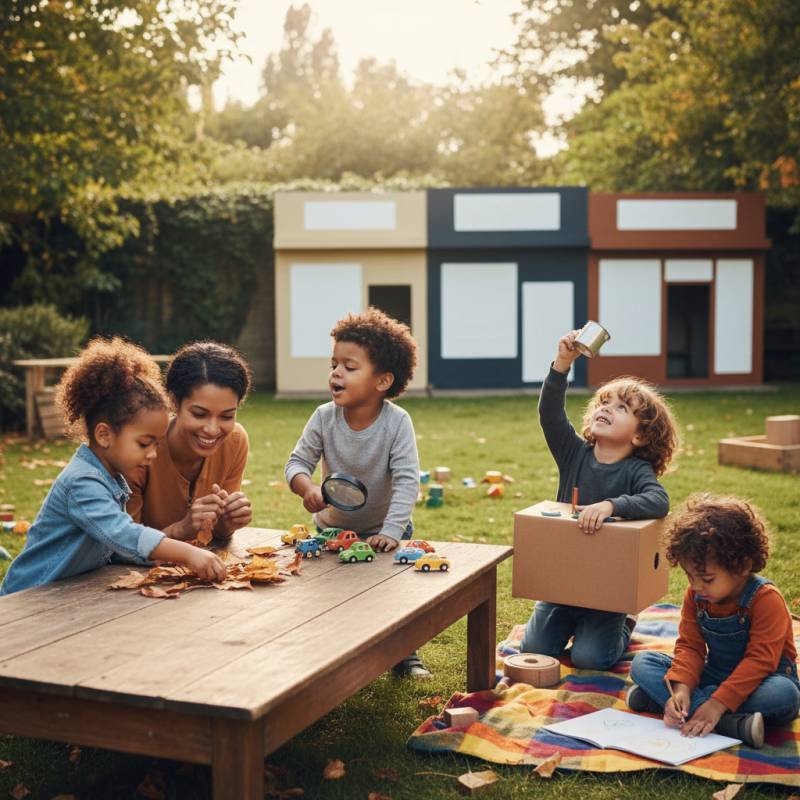
Children learn through play because it lets them test ideas, notice patterns, and try again without the pressure of a right answer. A cardboard box can become a shop; counting wooden blocks then has a purpose. During pretend play, children practise language and negotiation. In a puzzle, they compare shapes and adjust their approach. The American Academy of Pediatrics’ 2018 clinical report describes play as supporting social, emotional, language, and thinking skills. These gains are not automatic, though. A child may need an adult to offer a small prompt, then step back and let the child lead.
Movement matters, too. World Health Organization guidelines recommend that children aged three to four get at least 180 minutes of varied physical activity each day, including 60 minutes of moderate-to-vigorous activity. A playful routine could include a hallway obstacle course, dancing to a beat, or carrying soft toys to a pretend “home.” Keep materials simple and watch what holds a child’s attention. Some activities will fall flat. That is useful information, not failure. Adults can notice whether a child prefers building, storytelling, or movement, then adjust the play without turning every moment into a lesson.
| Play-Based Approach | Example Activity | What Children Can Practise | Helpful Adult Support | What to Notice |
|---|---|---|---|---|
| Build and create | Build a bridge or tower with blocks, then test how much weight it can hold. | Spatial reasoning, planning, counting, and learning through trial and error. | Offer varied materials and ask, “What could make it stronger?” | The child experiments, adjusts a design, or explains an idea. |
| Pretend and role-play | Set up a pretend shop, clinic, or restaurant using household items. | Language, imagination, perspective-taking, and early number concepts. | Join the play when invited and introduce open-ended questions or new roles. | The child creates a story, uses new words, or negotiates roles with others. |
| Move and learn | Play a movement game that involves counting jumps, following directions, or sorting objects by color. | Listening, coordination, counting, and following multi-step directions. | Keep rules simple, demonstrate the activity, and adapt it to the child’s abilities. | The child follows a sequence, counts aloud, or tries a new movement. |
| Explore outdoors | Take a nature walk and look for different leaf shapes, textures, or signs of weather. | Observation, vocabulary, comparison, and curiosity about the natural world. | Encourage careful looking and ask, “What do you notice?” without rushing to give answers. | The child describes differences, asks questions, or sorts collected observations. |
| Make up stories | Use toys, drawings, or picture cards to invent a story with a beginning, middle, and end. | Narrative skills, sequencing, vocabulary, and creative thinking. | Take turns adding to the story and let the child choose how it develops. | The child connects events, describes characters, or invents a solution to a problem. |
| Play simple games | Play a matching game, a simple board game, or a turn-taking card game. | Memory, attention, pattern recognition, patience, and taking turns. | Choose age-appropriate rules and model how to handle both winning and losing. | The child remembers a rule, waits for a turn, or responds calmly to a change in outcome. |
Activities work best when they are safe, suited to the child’s interests and abilities, and flexible enough to allow exploration.
Turning a cardboard box into a shop gives counting a purpose. Children also practise language and negotiation.
No. Offer a small prompt, then let the child lead. Adults can sometimes step in too quickly.
Pair familiar word cards with small drawings. Ask the child to explain each match in their own words.
Pause, shorten the round, or change the rules. Fun should not feel like a test.
Ask what might happen next, then invite a different ending. A paper-bag puppet can bring characters to life.
Yes. Sorting buttons or building a block bridge can encourage exploration. Mess is okay.
They should get at least 180 minutes of varied activity daily, including 60 minutes of moderate-to-vigorous activity. Try dancing or a hallway obstacle course.
Notice what holds the child’s attention, then adjust. A careful plan may need simplifying. That happens.
Making learning enjoyable starts with understanding that children often learn best through play, curiosity, and active exploration. A warm, encouraging environment helps them feel comfortable asking questions, trying new things, and learning from mistakes. Games, stories, and hands-on activities can turn ideas into memorable experiences, while everyday interests—such as nature, art, or favorite hobbies—offer engaging ways to connect new knowledge with familiar subjects.
Finding how to make learning fun for children also means recognizing that every child learns differently. Some may benefit from movement and practical tasks, while others respond best to conversation, pictures, or quiet reflection. By adapting activities to each child’s needs, offering choices, and celebrating effort as well as progress, adults can support confidence, creativity, and a lasting enthusiasm for learning.

 OS Toys