Why Are STEM Skills Important for Future Learning in China?

Time:2026-10-02 Author:Madeline
0%

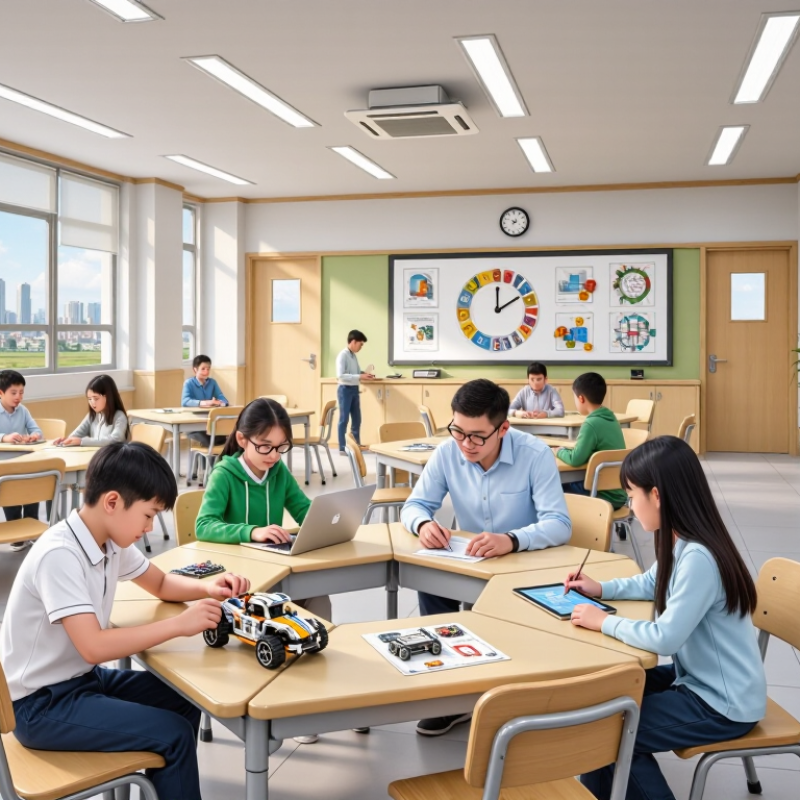
China’s classrooms are changing as technology, climate challenges, and advanced manufacturing reshape everyday life. A student debugging a simple robot is not merely learning code. They are practicing patience, evidence-based reasoning, and teamwork.

This context explains why are stem skills important for future learning. Science, technology, engineering, and mathematics help students ask better questions and test practical solutions. These abilities support later study in artificial intelligence, medicine, environmental science, and digital business. China’s curriculum reforms increasingly value inquiry, problem-solving, and interdisciplinary learning. However, meaningful STEM education requires more than modern equipment or impressive competitions.

A rural classroom may have one shared computer. An urban school may offer robotics laboratories and trained mentors. This gap matters. Teachers need sustained professional development, reliable resources, and assessment methods that reward curiosity, not memorization alone. Families also need clear guidance, because excessive exam pressure can reduce creative risk-taking. Research and classroom experience suggest that students learn more deeply when they connect formulas with familiar problems, such as measuring water use or designing safer bicycle routes.

The picture is not perfect.

I may overstate technology’s power if I ignore language, confidence, and teacher support. STEM learning should remain inclusive, especially for girls, rural learners, and students with disabilities. A strong future-learning strategy in China must combine technical knowledge with communication, ethics, cultural understanding, and lifelong adaptability. That balanced approach can prepare young people to use innovation responsibly, rather than simply follow technological change.
Why Are STEM Skills Important for Future Learning in China?

Definition and Scope of STEM Skills in China

In China, STEM skills should mean more than learning formulas or writing simple code. A practical definition includes scientific reasoning, quantitative literacy, computational thinking, engineering design, data interpretation, and evidence-based communication. It also includes teamwork and ethical judgment. These abilities connect classroom knowledge with a factory sensor, a farm’s water meter, or a hospital data dashboard. This scope is broad. However, it is not unlimited. Reading and civic judgment still matter, even when a lesson uses algorithms.

The scale of China’s innovation system makes this definition urgent. National Bureau of Statistics data show that China’s research and development spending reached 3.32 trillion yuan in 2023, equal to 2.64% of GDP. The UNESCO Science Report estimated that China represented 21.1% of the world’s researchers in 2018. These figures measure investment and researchers, not classroom mastery. That distinction matters. More laboratories do not automatically produce better reasoning. Students need repeated practice: testing a bridge model, checking noisy data, and explaining why a result failed.

The World Economic Forum’s Future of Jobs Report 2023 says 44% of workers’ skills may be disrupted by 2027. It ranks analytical thinking as the leading core skill. For Chinese learners, future readiness therefore means transfer, not memorization alone. A student should move from a textbook equation to a local energy problem. That expectation is demanding. Schools may still overvalue correct answers and polished demonstrations. STEM education needs stronger links among subject teachers, workplaces, and community questions.

The Role of STEM Skills in China’s Education System

STEM skills are becoming central to China’s education system because future learning requires more than memorizing formulas. Students need to ask precise questions, test ideas, and explain evidence. In a science lesson, this might mean measuring water quality near a school. In a mathematics class, students could compare transport data and identify patterns. These tasks connect knowledge with daily decisions.

The OECD’s PISA 2022 report offers useful evidence. Students from Beijing, Shanghai, Jiangsu, and Zhejiang scored 590 in science and 575 in mathematics. These results show strong academic foundations, but they do not measure every learning need. Independent thinking and collaboration remain harder to assess. The World Economic Forum’s Future of Jobs Report 2023 lists analytical thinking as the leading core skill for employers. This supports a wider role for STEM education in China, especially when lessons involve research, coding, design, and communication.

However, classroom practice can become too examination-focused. A student may solve ten equations correctly but struggle to design one fair experiment. That gap deserves attention. Teachers need practical training, suitable laboratories, and assessment methods that reward revision. Small failures should be visible. A broken prototype can reveal more than a perfect worksheet. Rural schools may also face fewer equipment and staffing resources, so equal access cannot be assumed. STEM development must therefore include local projects, low-cost materials, and patient teacher support.

Why Are STEM Skills Important for Future Learning in China?

PISA 2018 average scores: Beijing, Shanghai, Jiangsu and Zhejiang compared with the OECD average

The results show strong performance in mathematics and science among students from the four participating Chinese regions. These foundational STEM skills support problem-solving, scientific reasoning and the ability to learn emerging technologies in the future. Data source: OECD, PISA 2018 Results.

How STEM Learning Develops Future-Ready Abilities

STEM learning in China is becoming less about memorizing formulas and more about using knowledge to face unfamiliar problems. When students design a water filter, they measure flow, test materials, and explain failed attempts. That process builds scientific reasoning, communication, and patience—abilities needed for future study and work. These skills transfer beyond the laboratory.

An effective project needs more than colorful equipment. In a realistic classroom task, students might investigate why a school garden dries unevenly. They collect soil data, compare sunlight, calculate water use, and present a low-cost adjustment.

Teachers can assess the reasoning, not only the final model. Peer feedback adds a professional habit: defend a claim, listen, then revise. This resembles real engineering practice.

Still, STEM does not automatically create future-ready learners. Heavy exam pressure, limited laboratory time, or uneven teacher training can reduce projects to worksheet exercises. Some students may copy a clever design without understanding it. That is a warning. Schools need safe experiments, open questions, and assessment that rewards thoughtful failure. Teachers should connect coding, mathematics, science, and local needs rather than teaching isolated techniques. Quiet observation can be equally powerful. The answer may change.

China’s Growing Demand for STEM Talent

Why Are STEM Skills Important for Future Learning in China?

China’s growing demand for STEM talent is changing classrooms, workplaces, and career planning. Demand is visible. Engineers are needed for artificial intelligence, advanced manufacturing, clean energy, medical devices, and agricultural technology. A factory may require workers who can read sensor data, adjust robotic equipment, and identify faults quickly. These tasks demand more than memorized formulas.

Schools are responding with coding lessons, laboratory projects, and mathematics linked to daily problems. In one practical activity, students might measure water quality, build a simple circuit, or program a small vehicle to avoid obstacles. Such experiences connect theory with evidence. They also develop patience, teamwork, and careful testing. STEM learning is becoming more important outside major cities too, although resources remain uneven. A well-equipped urban laboratory cannot represent every student’s experience.

The challenge is not only producing more graduates. Employers often need people who can explain technical ideas clearly and work across different fields. Some students still spend too much time preparing for exams, leaving limited space for experimentation. That approach can produce strong test results, but weaker problem-solving habits. It deserves reflection. Future learning should include statistics, digital literacy, ethical judgment, and hands-on practice. China’s STEM workforce will need creativity as well as accuracy, especially when new technologies create unfamiliar problems.

Challenges and Opportunities for STEM Education in China

STEM skills matter in China because future learning will demand more than memorized answers. Students will need to test ideas, interpret data, and explain decisions clearly. China’s curriculum reforms increasingly connect science, technology, engineering, and mathematics with practical problems. Yet classroom pressure remains strong. Many teachers must prepare students for examinations while creating time for experiments. A crowded lesson can reduce a bridge-building task to a worksheet. That is a missed opportunity.

The challenges are uneven resources, limited teacher training, and different learning conditions between urban and rural schools. Some classrooms have advanced laboratories. Others rely on paper, recycled materials, or shared equipment. This gap affects confidence, not only technical knowledge.

Still, China has strong opportunities through maker spaces, community projects, and interdisciplinary lessons. Students could study water quality near their homes, measure traffic noise, or design low-cost farming tools. Such tasks make learning visible and useful. They also expose weaknesses in our planning.

Tips:

Begin with one local problem, not expensive equipment. Let students predict, test, fail, and revise. Teachers should record the process, not only the final answer. Use simple sensors, rulers, cardboard, and open data where possible. Invite engineers, researchers, and skilled technicians to discuss real work. Most importantly, assess reasoning and teamwork alongside correct results. Progress may look untidy. That is normal.

FAQS

What does STEM education include beyond formulas and basic coding?

It includes scientific reasoning, quantitative literacy, computational thinking, engineering design, and data interpretation. Students also practice teamwork, ethical judgment, and evidence-based communication. The scope is broad.

Why are STEM skills important for Chinese learners?

China’s research and development spending reached 3.32 trillion yuan in 2023. However, investment alone does not prove strong classroom reasoning. Learners need repeated practice with real problems and imperfect results.

How can students develop scientific reasoning through projects?

Students can test a bridge model, inspect noisy data, and explain why a result failed. They learn to connect evidence with conclusions. Failure becomes useful evidence.

What might a practical school STEM project look like?

Students could investigate why a school garden dries unevenly. They measure soil moisture, compare sunlight, calculate water use, and suggest a low-cost adjustment. The garden provides visible evidence.

How does STEM learning build future-ready abilities?

Projects help students transfer knowledge to unfamiliar situations. For example, an equation can support a local energy investigation. Memorization alone is not enough.

Should teachers assess the final model or the learning process?

Teachers should assess reasoning, testing, communication, and revision, not only appearance. A polished model may hide weak understanding. That risk deserves attention.

How do teamwork and peer feedback support STEM learning?

Students defend a claim, listen to criticism, and revise their design. These habits resemble practical engineering work. The process can feel uncomfortable.

What challenges can limit effective STEM education?

Exam pressure, limited laboratory time, and uneven teacher training can weaken project learning. Some students may copy attractive designs without understanding them. Schools need safer experiments, open questions, and better links among subjects.

Conclusion

STEM skills—covering science, technology, engineering, and mathematics—include more than technical knowledge. In China, they involve inquiry, logical reasoning, digital awareness, problem-solving, creativity, and the ability to apply knowledge to real situations. Within the education system, STEM learning can connect different subjects and encourage students to move from memorizing information toward investigating questions, testing ideas, and explaining evidence. This approach supports deeper understanding and makes learning more active and meaningful.

The question “why are stem skills important for future learning” can be answered through their role in developing adaptable, future-ready learners. STEM experiences help students build collaboration, communication, critical thinking, and independent learning abilities, which are valuable as knowledge and technologies continue to change. China’s growing need for skilled professionals also creates strong opportunities for STEM education. However, unequal resources, limited teacher preparation, and differences between regions remain challenges. Continued investment in teacher development, practical learning, inclusive resources, and creative educational methods can help more students benefit from STEM learning.

Madeline

Madeline

Madeline is a dedicated marketing professional with a wealth of expertise in our company's core offerings. With a keen understanding of the industry, she brings a unique perspective to her role, consistently delivering high-quality content that highlights the superior aspects of our products. As......